
Summary
If you’re researching plug-and-play hot tubs or 115V hot tubs, you’ve likely come across the term thermal friction heating. It’s one of the most common—and misunderstood—heating methods in this category.
So how can a hot tub heat water without a traditional heater? And is it the right choice for your lifestyle?
Let’s break it down.
What Is a Thermal Friction Hot Tub?
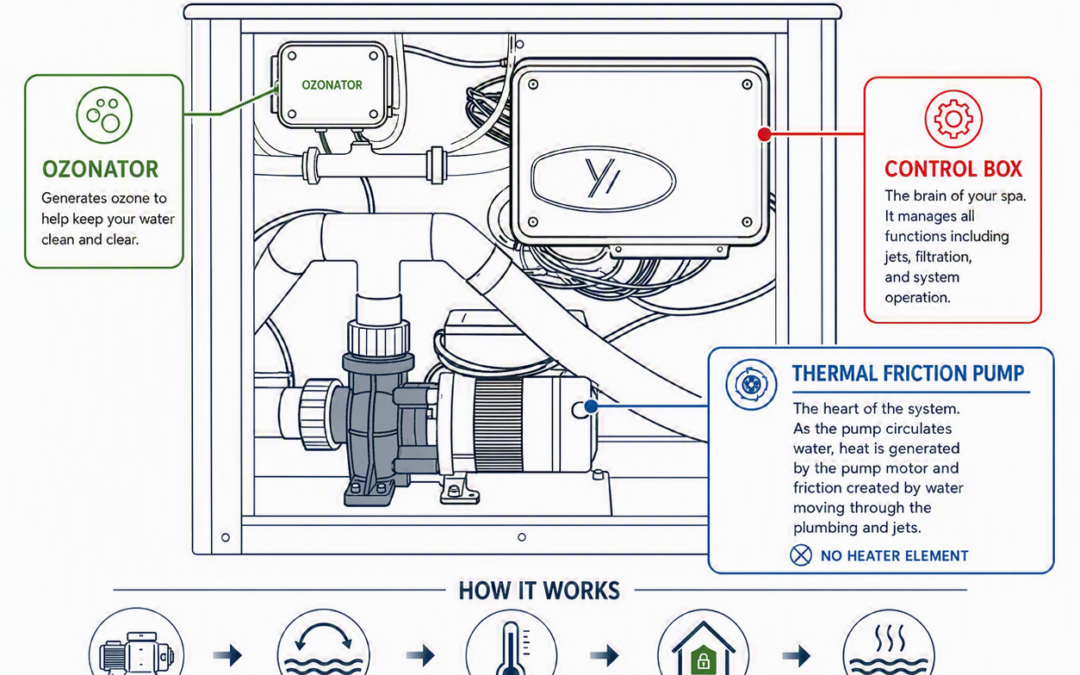
A thermal friction hot tub is a spa that heats water without a dedicated electric heating element.
Instead of using a traditional heater, these spas rely on:
- The natural heat generated by the pump motor
- Friction from water movement through plumbing and jets
- High-quality insulation to retain heat
Key takeaway:
There is no physical heater inside a thermal friction spa—heat is created as a byproduct of normal operation.
How Thermal Friction Heating Works
When your spa is running:
- Water is continuously circulated through the system
- The pump motor generates heat as it operates
- Water moving through pipes and jets creates friction
- That heat energy gradually increases the water temperature
- Insulation helps trap and maintain the heat
This is a slow, steady heating process, not an instant heat-up system.
How Fast Do Thermal Friction Hot Tubs Heat?
Thermal friction systems heat gradually, so it’s important to set expectations:
- Typical heating rate: ~0.75°F per hour
What that means in real terms:
- 10°F increase → ~12–15 hours
- 20°F increase → ~24–30 hours
This is why most owners leave their spa at the desired temperature instead of reheating from cold.
Why Many Plug-and-Play Hot Tubs Use Thermal Friction
A large number of plug-and-play (115V) hot tubs use thermal friction heating due to one key limitation: available power.
Standard outlets:
- Provide about 15 amps
- Must power the pump, controls, and accessories
- Leave little room for a high-output heater
Rather than overload the system, manufacturers design around this by:
- Using thermal friction as the heating method
- Optimizing insulation for heat retention
Result: A reliable, efficient spa that works with a standard household outlet.
Heating Comparison: Thermal Friction vs. Electric Heaters
Here’s how thermal friction stacks up against traditional systems:
🔹 Thermal Friction (115V Plug-and-Play Spas)
- No heater element
- Heating rate: ~0.75°F/hour
- Uses pump-generated heat
- No electrical upgrades required
🔹 1 kW Electric Heater (Limited 115V Systems)
- Small built-in heater
- Heating rate: ~1.5°F/hour
- Still constrained by outlet capacity
🔹 4 kW Electric Heater (230V Hardwired Spas)
- Dedicated heater + electrical install
- Heating rate: ~3–6°F/hour
- Fast heat-up and recovery
Key takeaway:
Thermal friction is slower—but far simpler and more accessible.
Air Valves Matter More Than You Think
One of the most overlooked factors in thermal performance is air valve position.
When the spa is NOT in use:
Keep all air valves CLOSED
Why?
- Open valves pull in cooler outside air
- This lowers water temperature
- It slows down heating and wastes energy
When using the spa:
- Open valves for stronger jet action
- Close them again when finished
Pro tip:
Closing air valves after each soak can significantly improve heat retention.
When Thermal Friction Hot Tubs Work Best
Thermal friction systems shine in the right conditions.
✅ Ideal for Moderate Climates
- Less extreme heat loss
- More efficient temperature maintenance
✅ Great for Short, Regular Soaks
- Up to 30 minutes per session
- Once per day (or similar frequency)
- Water stays consistently warm between uses
✅ Best for Set-and-Maintain Use
- Keep spa at temp instead of reheating
- Consistent operation = better efficiency
A Smart Choice When Power Is Limited
If you cannot (or don’t want to) install a 230V connection, thermal friction spas are an excellent option.
Benefits of Plug-and-Play Thermal Friction Spas:
- Plug into a standard outlet
- No electrician required (in most cases)
- Lower installation cost
- Simpler system with fewer parts
- Reduced maintenance complexity
Bottom line:
If power options are limited, a plug-and-play thermal friction hot tub is one of the easiest ways to get started.
Best Practices for Performance
- Keep the cover on when not in use
- Always close air valves after use
- Avoid full cool-down cycles
- Plan extra for heating time after fresh fills
Final Thoughts: Is Thermal Friction Right for You?
Thermal friction hot tubs aren’t about speed—they’re about simplicity, reliability, and accessibility.
They’re a great fit if you:
- Want a plug-and-play hot tub (115V)
- Prefer low maintenance systems
- Don’t want to upgrade electrical service
- Use your spa consistently for shorter durations
While a 230V spa with a 4 kW heater offers faster heating, many homeowners find that thermal friction delivers everything they need—with far less complexity.